Inaugural Working Session, Organized & Hosted by IEMSA
Lead the Future of EMS. Don't Chase It.
Emerging EMS Technology: Strategic Leadership to Implementation. Two days of hands-on AI and technology work, built for the EMS leaders who will decide what comes next.
Includes a signed copy of the book, Thursday lunch, and more than 11 hours of professional development. Registration is handled by the Iowa EMS Association.
Organized & hosted by IEMSAMore than 11 hours of professional developmentThe signed book, includedLimited to 225 seats
2
Days of hands-on, implementation-focused work
11+
Hours of professional development for EMS executives
53.2M
EMS activations in the NEMSIS dataset behind the analysis
1
Signed copy of the book for every registered seat
Data source: NEMSIS 2022 Public-Release Research Dataset. Original analysis by Donnie Woodyard, Jr.
The Premise
You already know AI matters. This is where you decide what to do about it.
EMS leaders are past the question of whether artificial intelligence, autonomous systems, advanced air mobility, and data-driven care will reshape prehospital medicine. They are not on the horizon. They are here. The real gap facing our field today is not awareness. It is implementation.
This is a two-day working session for the directors, chiefs, medical directors, and decision-makers who are ready to stop reading about the future and start building it. Day one, you understand the technology. Day two, you lead it. You will do the work alongside peers carrying the same staffing math and the same budget pressure, and you will leave with a plan you can start Monday morning.
A Personal Invitation
Hear it from Donnie.
A short invitation from your host, on what the conference is, who it is for, and why it matters now.
Already Here, Not on the Horizon
The hard part isn't awareness. It's implementation.
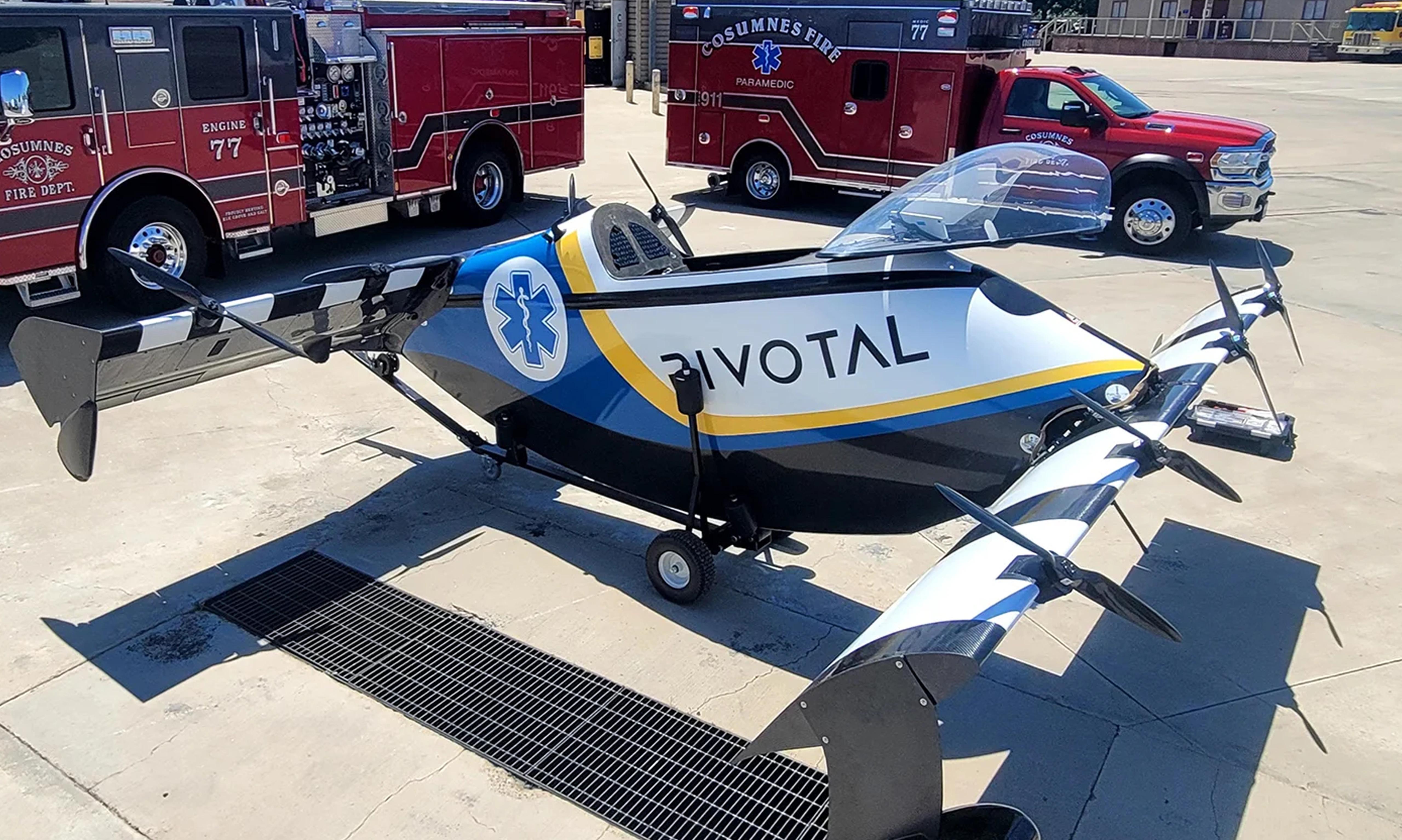
Autonomous-vehicle pilots, eVTOL medical transport demonstrations, drone response programs, and AI-assisted documentation are no longer theoretical. The question for EMS leaders is not whether these technologies arrive, but how to evaluate them responsibly, on their own terms, before vendors, policymakers, or market pressure define those terms for them. That is what these two days are for.
Who This Is For
Built for the people who sign the decision.
This is for you if you are an
✓ EMS chief, agency director, or county EMS leader
✓ State EMS official or regulator
✓ Medical director, or fire and EMS executive
✓ Senior leader responsible for technology, data, clinical operations, or strategy
This is not
× A vendor expo or sales floor
× A beginner lecture on what AI is
× An abstract futures talk with no takeaways
× A clinical continuing-education course
What You Leave With
You don't leave with notes. You leave with a plan.
01
A way to decide
A repeatable method to evaluate and adopt technology responsibly, so you can tell a tool that moves your system forward from a shiny distraction that drains your budget.
02
Finished work product
A draft AI policy for your agency, a vendor evaluation checklist, a workforce plan, and a written 90-day action plan with specific commitments. You build them in the room, not on the drive home.
03
A network and a voice
A room full of peers you will be calling six months from now, plus the language, the evidence, and the conviction to lead these conversations back home instead of waiting to be told what to do.
The concrete output: the day-two Action Planning Workshop is working time. You leave with a written 90-day plan: one technology to pilot, one leader to develop, and one barrier to remove.
Why This One Is Different
Come do the work. Not just watch a slideshow.
01
You do the work
Every argument session runs the same way: a sharp thesis, then real discussion at your table where you agree, disagree, and defend it. Not a slideshow.
02
Hands on with the tools
You put your own hands on AI platforms and large language models, live, from first prompt to power user, on a real task. Not a demo from a stage.
03
Inside the Technology
Four briefings show how the AI actually works inside the products entering EMS. Built to teach, not to sell. One rule: show us how it works, not why to buy yours.
04
Built by your peers
Four EMS leaders, chosen by the attendees, show how they have put AI and technology to work in their own services. Real implementation, real results.
05
Built for rural systems
The systems with the least slack have the most to gain. Rural and resource-limited EMS is a design priority in every session, not an afterthought.
06
Built to be funded
The Rural Health Transformation Program is moving $50 billion into rural health, with technology, data, cybersecurity, and prehospital services named as eligible uses. The first-year window closes in fall 2026.
The agencies that succeed will be the ones that prepare now, lead decisively, and implement strategically.
Donnie Woodyard, Jr., National Speaker
The Agenda
Two days, one arc: understand it, then lead it.
Times shown in Central. Highlighted sessions are facilitated thesis-and-table or hands-on blocks. Inside the Technology spotlights and peer presentations run throughout.
Day 1 · Wed, Sep 9 · 1:00 – 5:30 PM
Understand It
Welcome & Frame the Work
Healthcare or Transport?
AI in EMS: The 13-to-1 Gap
Inside the Technology: Spotlight
Hands-On with AI: From First Prompt to Power User
Peer Innovation Presentations
Data & the Connected Ambulance
The Future of EMS Mobility
Entertainment & Networking
Day 2 · Thu, Sep 10 · 8:00 AM – 5:00 PM
Lead It
Welcome Back & Day 2 Frame
Govern It: Ethics, Security & Policy
Inside the Technology: Spotlight
Buying It Right
Deciding Under Uncertainty & Leading Change
Inside the Technology: Spotlight
Building & Funding the Case: RHTP
The Human Side: Your Workforce
Lunch, provided by IEMSA
Leadership at the Edge
EMS at the Crossroads
Inside the Technology: Spotlight
Peer Innovation Presentations
Action Planning Workshop
Reflections & Close
Facilitated or hands-on block Inside the Technology spotlightMore than 11 hours of professional development.
Before you choose technologies, answer the question that governs everything, and why it still decides how you get paid and whether you can see a patient's records.
The 13-to-1 Gap
Roughly 80% of physicians use AI; about 6% of EMS agencies do. The gap is widening in real time, and your clinicians are likely already using these tools with patient data.
Hands-On with AI
Bring a device and go from first prompt to real work: drafting a policy, summarizing research, building board talking points. Beginners leave confident, daily users leave sharper.
Data & the Connected Ambulance
The country is racing to kill the clipboard. Learn bidirectional exchange and how to query your own NEMSIS data in plain English, without waiting on a vendor dashboard.
Mobility, Now Operational
The FAA's eVTOL pilot launched this spring. Autonomous vehicles, eVTOL transport, and AED-carrying drones are moving from demo to deployment. You'll see the data, not the hype.
Govern It
The moment an AI-generated narrative is signed, it is a legal record, and you own it. Build the workflow, security, and policy that keep you defensible.
Buying It Right
The questions to ask, the contract terms to insist on, and how to run a real pilot before you commit your whole system to a vendor.
Building & Funding the Case
Where the money actually is: $50 billion in Rural Health Transformation funding, and how to position your agency before the first-year window closes this fall.
The Human Side
What this does to your people: deskilling, trust, recruitment, and the burnout math. Your most experienced medic's fear, answered honestly.
Leadership at the Edge
A field-tested framework for leading when the rules don't apply, drawn from building EMS in Sri Lanka's civil war and disaster response in Haiti.
EMS at the Crossroads
The capstone. You've spent two days learning the technology; here is what acting on it demands of you, your agency, and your profession.
Action Planning Workshop
Working time. You leave with a written 90-day plan: one technology to pilot, one leader to develop, one barrier to remove.
Inside the Technology, the one rule: four focused briefings show how the AI and engineering actually work inside the products entering EMS: the data, the guardrails, and the limits. Every presenter is held to one rule, show us how it works, not why to buy yours.
$50B
Rural Health Transformation Program
Built to Be Funded
The money is moving. The first-year window closes this fall.
The Rural Health Transformation Program is moving $50 billion into rural health, and technology, data, cybersecurity, and prehospital services are all named uses. You will leave knowing how to position your agency before the first-year window closes in fall 2026, not a year after the money is spoken for.
Featuring National Speaker
Donnie Woodyard, Jr.
MAML, NRP · Principal, Med1 Technology, LLC
Donnie Woodyard is one of the most experienced EMS system builders in the country, with more than 30 years leading EMS at every level, from field paramedic to state director to national executive. He currently serves as Executive Director of the United States EMS Compact, the governmental body enabling interstate EMS practice across more than two dozen states and over 450,000 clinicians.
As State EMS Director in Colorado and Louisiana, he championed regulatory reform, launched statewide mental-health initiatives for clinicians, and led through the COVID-19 pandemic. As COO at the National Registry of EMTs, he modernized technology systems and helped lay the groundwork for the EMS Compact. During Sri Lanka's civil war he designed the nation's first EMS framework and authored prehospital textbooks in Sinhalese and Tamil. Following the 2010 Haiti earthquake he directed multinational medical response teams serving more than 186,000 patients.
A six-time published author and Harvard AI in Healthcare certificate holder, he is a graduate of the Naval Postgraduate School's Executive Leaders Program, an FAA fixed-wing and Part 107 drone pilot, and a Civil Air Patrol squadron commander. He advises on emerging aviation technology for EMS, conducting market-intelligence analysis using national NEMSIS data.
ParamedicExec. Dir., US EMS CompactFormer State EMS DirectorFixed-Wing & Part 107 Drone PilotHarvard AI in HealthcareNaval Postgraduate School ELPSix-Time Author
Disclosure This conference is presented through Med1 Technology, LLC, a private consulting practice. This engagement is separate from and not affiliated with the Interstate Commission for EMS Personnel Practice (U.S. EMS Compact) or any other governmental entity.
Registration & Details
One seat. Everything included.
A signed copy for every seat
National Registration
$225per person, all in
Registration is open now to hold your seat, confirmed based on availability. Capacity is limited by design, so registering early is the only way to guarantee a place in the room.
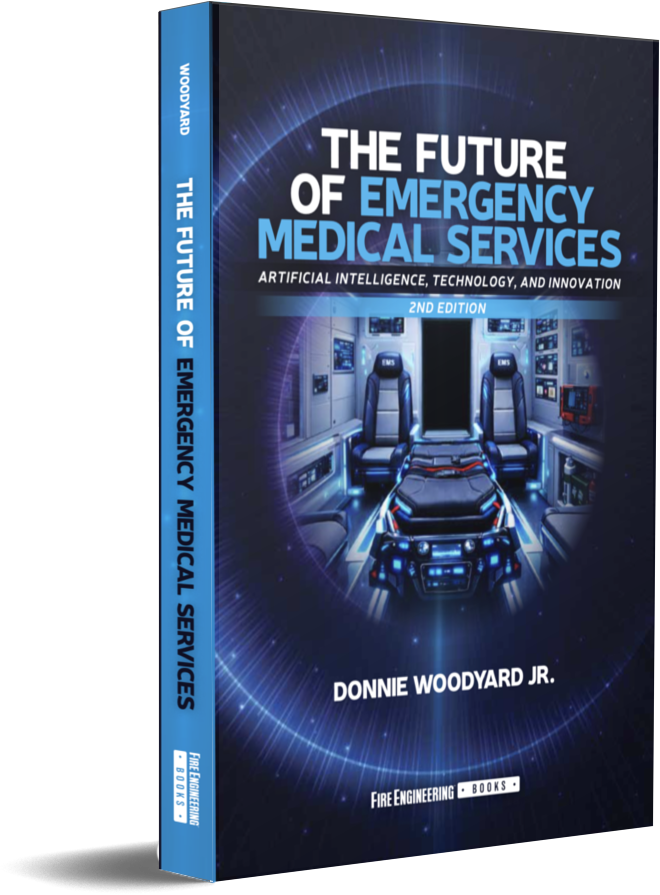
✓ A free, signed copy of The Future of Emergency Medical Services, 2nd Edition, presented at the conference
✓ Both full days of programming and the hands-on AI session
✓ Lunch on Thursday, provided by IEMSA
✓ A certificate for more than 11 hours of professional development in AI, Technology, and Leadership for EMS Executives
The chief, the medical director, and the data or IT lead will build a stronger 90-day plan together in the workshop than any of them will alone. Seats are limited, so reserve the team's places early.
Call for peer presenters
Put AI or emerging tech to work in your own service? Register to present your innovation when you arrive. Four sessions will be chosen by the audience, so come prepared. Not a sales pitch: real implementation, real results, 15 minutes each.
Questions, Answered
Before you register.
Who should attend?▸
This working session is built for EMS chiefs, agency directors, county and state EMS leaders, medical directors, fire and EMS executives, and senior staff responsible for technology, data, clinical operations, or strategy. It is not a beginner AI lecture or a vendor expo.
Is this clinical continuing education?▸
No. This is a leadership and professional-development event, not a clinical CE course. Attendees receive a certificate of attendance for more than 11 hours of professional development in AI, Technology, and Leadership for EMS Executives.
Do I need prior AI experience?▸
No. The hands-on session is designed to take you from your first prompt to confident, practical use. You will work with the tools directly, regardless of your starting point.
What is included in the $225?▸
Both full days of programming and the hands-on AI session, lunch on Thursday provided by IEMSA, a free copy of The Future of Emergency Medical Services, 2nd Edition, signed and presented at the conference, and a certificate for more than 11 hours of professional development.
Should I bring a laptop?▸
A laptop is recommended but not required. You will get the most out of the hands-on AI session if you can work along on your own computer. Wi-Fi is available at the venue.
How many seats are available?▸
Registration is capped at 225 participants to keep the session collaborative and the hands-on work manageable. Once it is full, registration closes.
Is lodging included?▸
Lodging is not included, but a discounted room block is available at the West Des Moines Hilton Garden Inn, the conference venue: $139 per night for a king or double room, available until August 25, 2026. Reserve through the room-block link in the registration details above, or call the hotel at (515) 223-0571.
Can I register if I am not an IEMSA member?▸
Yes. The conference is open to a national audience. On the IEMSA registration page, choose "Continue as Guest" and register at the $225 national rate. IEMSA members receive their member discount automatically when signed in.
Who hosts and registers attendees?▸
The conference is organized and hosted by the Iowa EMS Association (IEMSA). All registration is handled directly through IEMSA, so your payment and confirmation come from the official association, not a third party.
What is the cancellation policy?▸
For changes, cancellations, or refunds, contact the Iowa EMS Association directly at administration@iemsa.net or 515-225-8079.
The future of EMS will not be led by vendors or software alone. It will be led by the professionals on the ground who understand that burnout, staffing shortages, and outdated systems are not abstract challenges. They are daily operational realities.
Donnie Woodyard, Jr.
Limited Capacity
225 seats. Then registration closes.
This is a working session, not an open-capacity expo. Registration is capped at 225 EMS leaders, so the room stays collaborative and the hands-on work stays workable. Once those seats are claimed, registration closes. If you intend to lead your system's future, register early through IEMSA.
Paramedic, pilot, and Executive Director of the United States EMS Compact. Author of The Future of Emergency Medical Services: AI, Technology & Innovation and five additional titles on EMS history, leadership, and policy.
ParamedicFixed-Wing PilotFAA Part 107 Commercial Drone PilotExec. Dir., US EMS CompactFormer State EMS DirectorSix-Time Author30+ National Keynotes