The Revolution

The Future of Medical Transport

Drones delivering AEDs during live 911 calls. eVTOL aircraft in FAA certification. Autonomous vehicles completing 400,000+ paid rides per week. The question is no longer if — it's how fast, and who will lead.

March 2026

FAA Selects Eight eIPP Projects Spanning 26 States — Operations Begin Summer 2026

On March 9, 2026, U.S. Transportation Secretary Sean Duffy and the FAA unveiled the eVTOL Integration Pilot Program (eIPP) — eight public-private partnerships creating one of the largest real-world testing environments for next-generation aircraft ever assembled. Operational concepts include urban air taxis, regional passenger transport, cargo logistics, emergency medical response, and autonomous flight. The American public will see operations begin by summer 2026.

The selected projects are led by the Port Authority of New York & New Jersey, Texas DOT, Utah DOT, Pennsylvania DOT (a 13-state NASAO collaborative), Louisiana, Florida DOT, North Carolina DOT, and the City of Albuquerque. Industry partners include Archer Aviation, BETA Technologies, Joby Aviation, Electra, Wisk Aero, Elroy Air, and Reliable Robotics.

EMS-specific projects: Florida’s statewide effort includes dedicated medical response phases. North Carolina DOT will establish piloted medical and regional operations with BETA and Joby. This is exactly the federal pathway this site has been tracking.

DOT Announcement → FAA eIPP Details →
March 10, 2026

NHTSA Hosts First-Ever National AV Safety Forum — Zoox Robotaxi Petition Opens

Transportation Secretary Duffy and NHTSA hosted over 400 engineers, safety officials, and industry leaders for the first-ever National AV Safety Forum in Washington, D.C. — with a CEO panel featuring Waymo, Zoox, and Aurora. NHTSA is now seeking public comment on what would be the first-ever commercial deployment of a purpose-built, steering-wheel-free robotaxi by Zoox, and released updated AV technical guidance for the first time since 2017.

Why this matters for EMS: If NHTSA rewrites Federal Motor Vehicle Safety Standards to accommodate vehicles without steering wheels, that same regulatory pathway is the one autonomous ground ambulances will need. The regulatory ground is shifting faster than most EMS leaders realize.

DOT Forum Summary →
The Data

The Aeromedical Transport Gap

An analysis of 53.2 million EMS activations from the 2022 NEMSIS Public-Release Research Dataset reveals that aeromedical transport is significantly underutilized relative to clinical need. The unmet need in rural areas alone nearly equals the entire current air transport market.

Analysis: Donnie Woodyard, 2026 • NEMSIS 2022 v3.4.0 • 53,179,492 EMS activations • All 50 states

Only 0.64% Fly

Of 53.2 million EMS activations in 2022, just 340,000 patients were transported by air — 290,503 by helicopter and 49,314 by fixed-wing. The other 99.36% went by ground or were not transported. For a system designed to get the right patient to the right facility in the right time, this ratio reveals a profound structural gap.

0.64% of patients fly Air: 340K Ground: 37M
Air Transport Penetration — Critical Patients
Rural Critical 35.6% Rural Emergent 10.0% Wilderness Crit. 35.4% Urban Critical 7.8% Urban Emergent 1.9% Even among rural critical patients, 64% go by ground.

300,115 Patients Left Behind

In rural and wilderness settings, 300,115 critical and emergent patients per year are transported by ground ambulance despite having diagnoses identical to current air transport patients — trauma, stroke, STEMI, cardiac arrest, sepsis, and respiratory failure.

That unmet need nearly equals the entire current air transport market. These are patients who would benefit from air transport if the constraints of cost, aircraft availability, and geographic coverage were removed. eVTOL aircraft are designed to remove exactly those constraints.

The Post-ROSC Destination Gap

Among cardiac arrest patients who achieve return of spontaneous circulation (ROSC) in the field, only 4.8% of rural and 6.1% of wilderness patients are transported by air. The rest go by ground — almost certainly to the nearest ED, not a PCI-capable cardiac center.

The clinical consequence is stark: among ground-transported ROSC patients, only 2.5% reach a STEMI/PCI-capable center. For air-transported ROSC patients, that number is 15.1% — a six-fold difference. An eVTOL at a critical access hospital could deliver post-ROSC patients directly to a cath lab.

Post-ROSC Patients Reaching PCI Center
Ground 2.5% Air 15.1% higher rate for air transport
Energy Cost per Flight Hour
$280 Bell 407 $375 H135 $438 Bell 429 $440 PC-12 $595 King Air ~$30 eVTOL ~89% reduction in energy cost per flight hour
Total Addressable Market (Annual Missions)
Tier 1 — Current Market 1.0×
323,741
Tier 2 — Rural/Wilderness Gap 1.9×
+300,115
Nearly doubles the current air market
Tiers 3 & 4 — Full Market Analysis 8.5× – 22×
Available under advisory engagement
Full geographic segmentation, diagnosis-level penetration gaps, infrastructure deployment model, and phased market entry strategy.
Third-Party Market Intelligence

What the Market Sees

Independent market research firms are projecting massive growth across every segment of this space — validating the opportunity your NEMSIS data quantifies from the demand side.

eVTOL Aircraft Market
$5.66B
projected by 2032 (from $596M in 2024)
32.5% CAGR
700+ eVTOL concepts in development worldwide
Source: DataM Intelligence, 2025
Air Ambulance Market
$44.4B
projected by 2033 (from $16.6B in 2024)
10.2% CAGR
Legacy HEMS: $15,000–$25,000/hr per mission
Source: DataM Intelligence, 2025
What This Means for EMS

The current air ambulance market serves 0.64% of EMS patients. Third-party analysts project it nearly tripling to $44B by 2033.

Now add the 300,115 patients/year your NEMSIS data identifies as the unserved rural gap — and the $1B+ India ePlane deal deploying 788 eVTOL air ambulances across every district.

The question isn’t whether eVTOL reshapes air medical. It’s whether U.S. EMS leads or follows.

Advisory & Consulting
Donnie Woodyard, Jr., MAML, NRP — EMS executive, pilot, six-time author, and nationally recognized keynote speaker on AI, autonomous vehicles, and eVTOL in emergency medical services

Donnie Woodyard, Jr.

30+ years of EMS leadership — not observing the industry from the outside, but building, reforming, and leading it from the inside. Multiple times throughout his career, Donnie has identified where EMS was headed before the rest of the industry caught up — and then helped drive the change.

State EMS Director — Colorado & Louisiana
Former COO — National Registry of EMTs
CEO — Private Ambulance Service
FAA Fixed-Wing & Part 107 Drone Pilot
Exec. Director — U.S. EMS Compact
Six-Time Author & 30+ Keynotes
Track Record of Predicting & Driving EMS Change
Early 2000s Part of the five-person team that designed and introduced the first electronic patient care reports (ePCRs) in the United States
Mid 2000s Introduced the King-LT airway to EMS — opened up new supraglottic airway devices for EMTs, with thousands of lives saved
2010s Conceptualized and led development of the National EMS ID credential — standardizing professional identification across states
2024 Led the introduction of the first AI-powered EMS documentation system in the United States
2025–26 National keynote speaker on autonomous vehicles, eVTOL, and AI in emergency medical services

The data shown above represents a fraction of the full aeromedical market analysis. For eVTOL manufacturers, air medical operators, investors, and health systems seeking to understand the true total addressable market, Donnie provides advisory and consulting services grounded in original NEMSIS research and three decades of EMS systems leadership.
Contact on LinkedIn → Speaking & Advisory
Autonomous Ground Vehicles

The Safest Driver on the Road Isn't a Person

Driving to scenes, returning from calls, and transporting patients is one of the most dangerous parts of the EMS profession. Autonomous technology has already proven it can be dramatically safer. The opportunity is not to replace every human-driven response — it is to augment traditional fleets for low-acuity transports, interfacility transfers, and repositioning operations.

32x
Ambulance crash rate per million miles — roughly 8 times higher than cars and light trucks
200M+
Fully autonomous miles driven by Waymo on public roads — with 90% fewer serious injury crashes than human drivers
400K+
Paid autonomous rides completed every week — targeting 1 million weekly by end of 2026 across 20+ cities
Advanced Air Mobility
Happening Now

Medical Drones & Defense Investment

Drones are delivering AEDs, Narcan, and tourniquets during live 911 calls — reaching patients in under two minutes. Zipline has completed hundreds of thousands of autonomous blood deliveries in Rwanda. The FDNY is testing drone-based trauma supply delivery. Beyond Visual Line of Sight operations are expanding under FAA waivers, and the medical drone market is projected to reach $2.5 billion by 2034.

Simultaneously, the Department of Defense is investing heavily in electric VTOL aircraft for military logistics and casualty evacuation. The same airframes being built for defense will define the next generation of civilian air medical transport — faster, quieter, and dramatically less expensive to operate than legacy rotorcraft.

2026–2030

eVTOL Transforms EMS Response

Electric vertical takeoff and landing aircraft are poised to fundamentally reshape how EMS deploys personnel, moves cargo, and transports patients. For the first time, EMS agencies will have access to aircraft that can launch from a parking lot, a rooftop, or a field staging area — no runway, no helipad required.

The implications are profound: rapid paramedic deployment to scenes inaccessible by ground, on-demand transport of blood products and critical medications, interfacility patient transfers that bypass traffic entirely, and new response models that decouple clinical care from the traditional ambulance. eVTOL creates options EMS has never had before — and the agencies that move first will define how those options are used.

In Certification & eIPP Operations

The Aircraft & the Operators

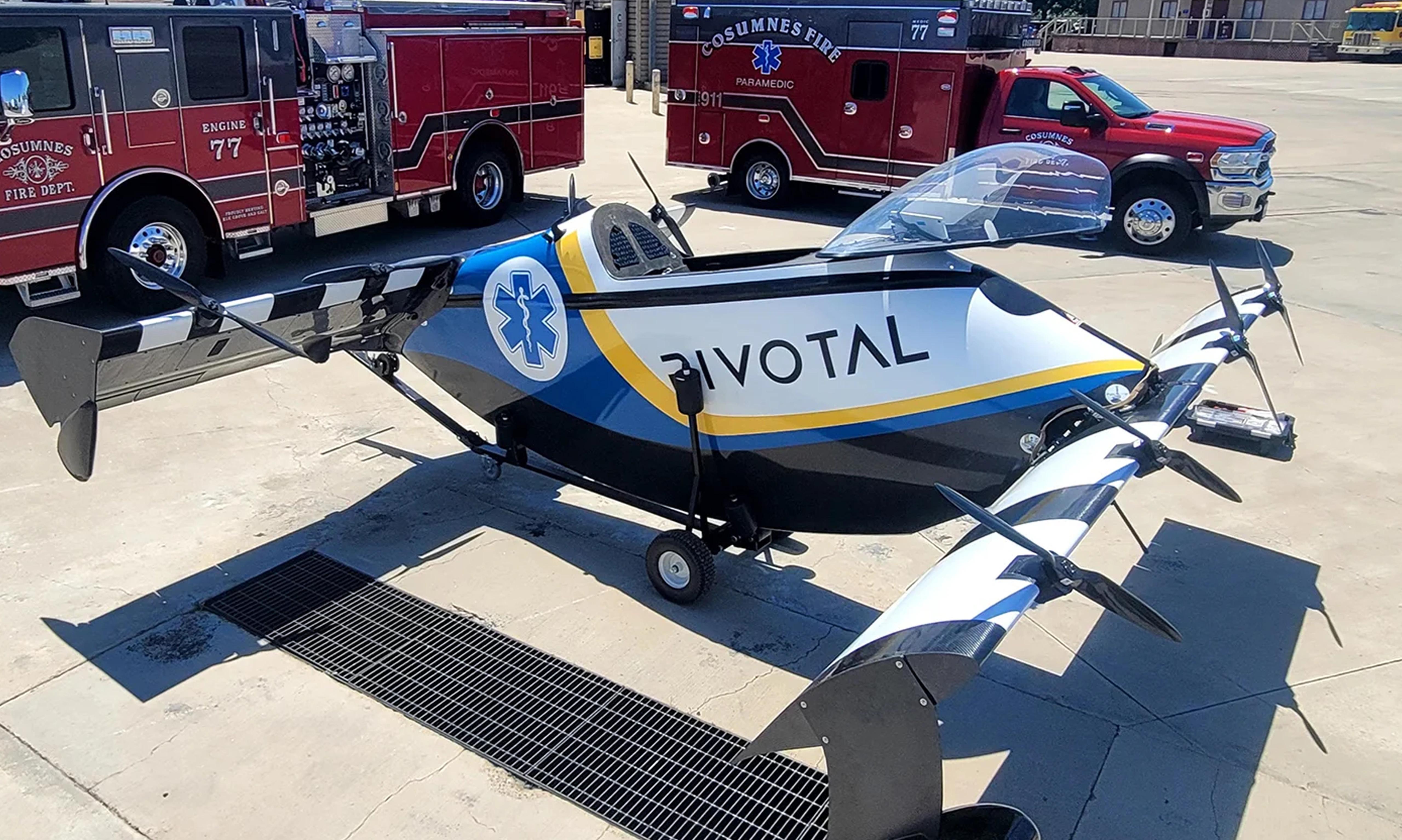
Multiple eVTOL platforms are in active FAA certification, and in March 2026, the FAA’s eVTOL Integration Pilot Program selected eight projects spanning 26 states — with operations beginning summer 2026. BETA Technologies was selected for seven of the eight projects, more than any other manufacturer. Joby Aviation appears in four projects. Archer Aviation in three. XTI Aerospace is developing the TriFan 600 — a hybrid vertical-lift aircraft with an air medical interior, 300+ mph cruise, and 1,000-mile VTOL range. Pivotal’s Helix is already deploying with EMS agencies in North Carolina for paramedic rapid response. These aircraft promise operating costs a fraction of legacy helicopters and the potential to triple annual air medical transport volume.

BETA TECHNOLOGIES CEO — MEDICAL TRANSPORT PRIORITY, JAN 2026
The Horizon

Autonomous & AI-Optimized Networks

The convergence of autonomous flight, AI-based dispatch, and distributed vertipad infrastructure will create intelligent medical transport networks. Predictive positioning will stage aircraft based on real-time demand patterns. Rural and frontier communities that have never had reliable air medical access will be connected to definitive care within minutes — not hours.

The federal pathway is accelerating. In March 2026, the FAA’s eIPP selected eight projects across 26 states — including autonomous flight demonstrations in Albuquerque with Reliable Robotics and autonomy-first operations by Wisk Aero in Texas. The DOT’s Advanced Air Mobility National Strategy coordinates 19 federal agencies behind AAM deployment through 2036. Meanwhile, NHTSA’s first-ever National AV Safety Forum is rewriting federal motor vehicle safety standards to accommodate vehicles without steering wheels — the same regulatory pathway autonomous ground ambulances will require.

Innovators Shaping the Future

Companies building the aircraft, vehicles, and infrastructure that will define the next generation of EMS transport. Several were selected for the FAA’s eIPP in March 2026.

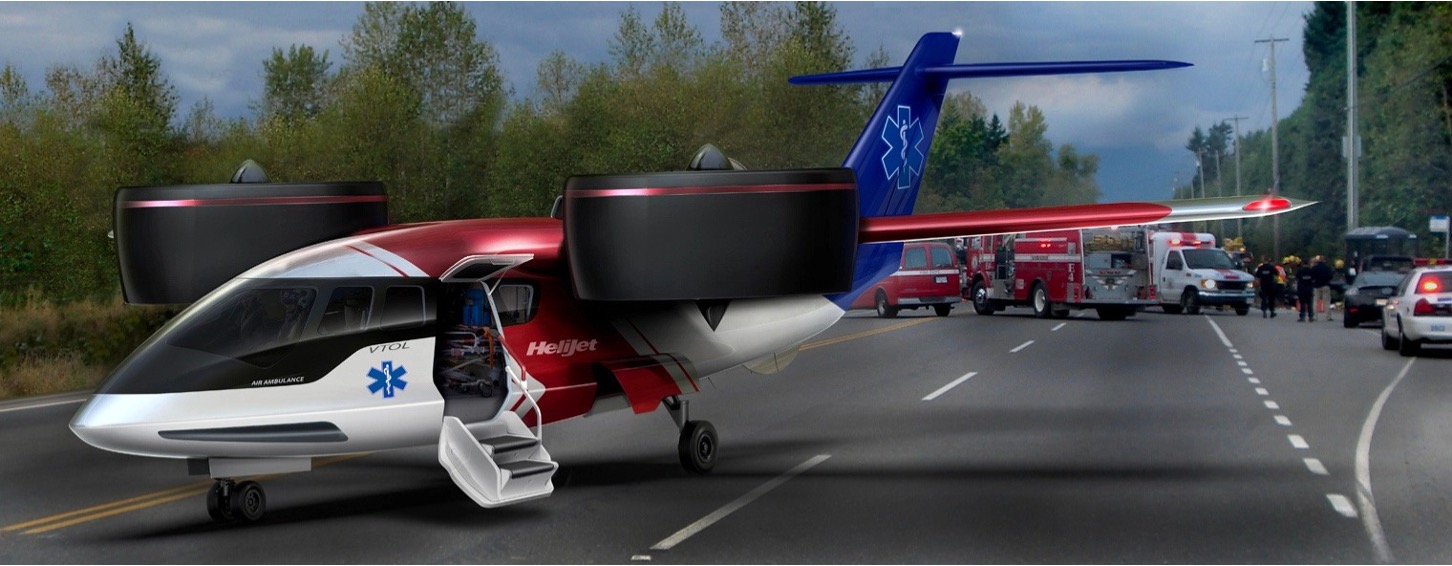
XTI Aerospace TriFan 600 hybrid eVTOL aircraft rendered in EMS air medical livery — projected 300+ mph cruise speed with 1,000-mile VTOL range
Hybrid VTOL Aircraft

XTI Aerospace

Developing the TriFan 600 — a hybrid vertical-lift aircraft with an air medical interior designed for EMS. 300+ mph cruise, 25,000-foot ceiling, and 1,000-mile VTOL range. FAA certification underway.

Pivotal Helix eVTOL aircraft deployed with Hyde County North Carolina Emergency Services for paramedic rapid response — the first EMS eVTOL proof-of-concept in the United States
EMS Paramedic Rapid Deployment

Pivotal

In March 2026, Pivotal launched a proof-of-concept with Hyde County, NC and Code Blue Resources — flight-trained paramedics deploying Helix eVTOLs for rapid emergency response. First pure-play eVTOL OEM in North America to earn AS9100D certification. Also demonstrated with San Bernardino County Fire.

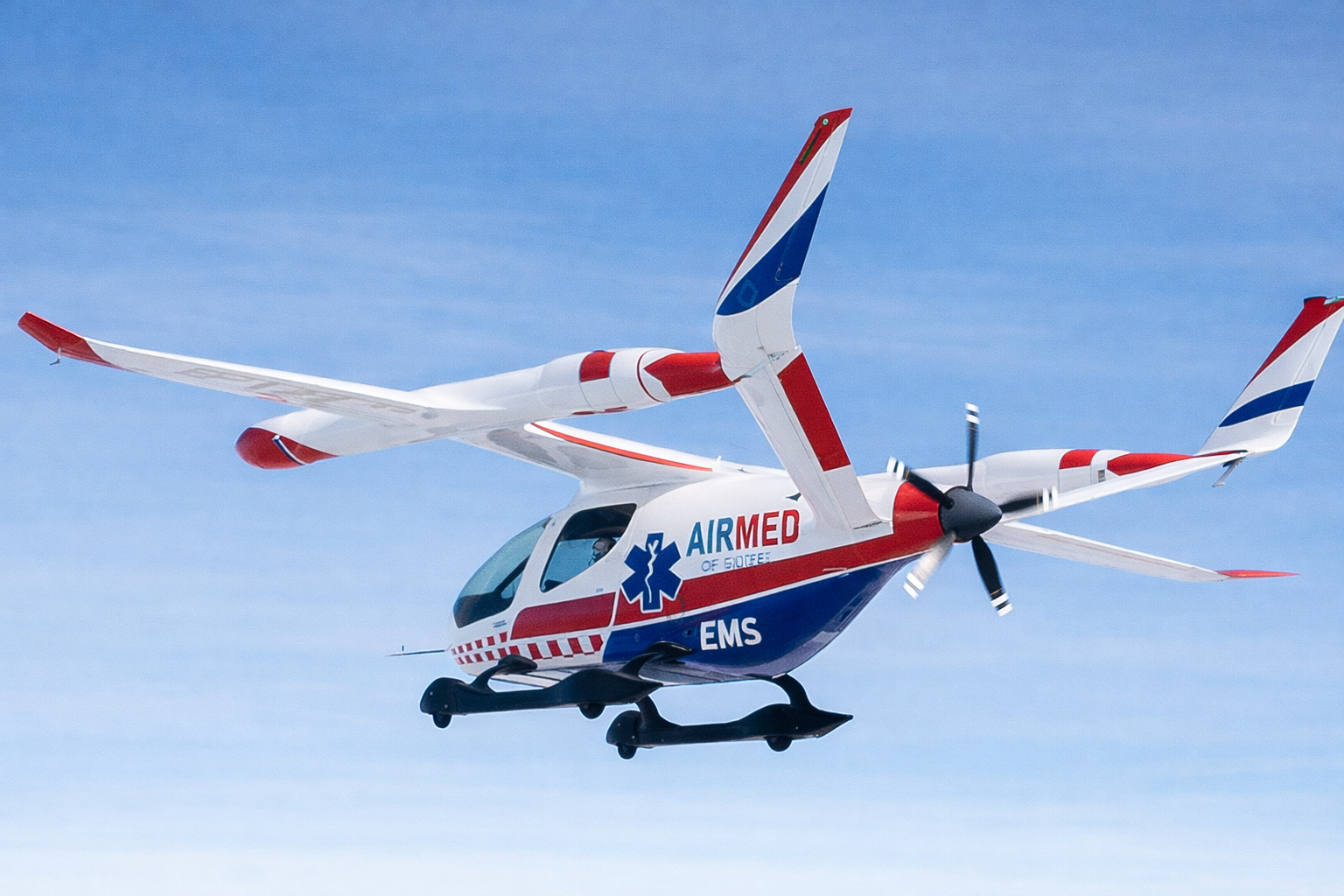
BETA Technologies ALIA electric aircraft in AirMed EMS livery — selected for 7 of 8 FAA eIPP projects in March 2026
Electric Aviation & Medical Transport  eIPP • 7 of 8

BETA Technologies

Selected for seven of eight FAA eIPP projects — more than any other manufacturer. Deploying ALIA CTOL and VTOL variants for cargo, medical logistics, and passenger missions. Metro Aviation ordered 20 eVTOLs for air medical ops. $20M HHS contract.

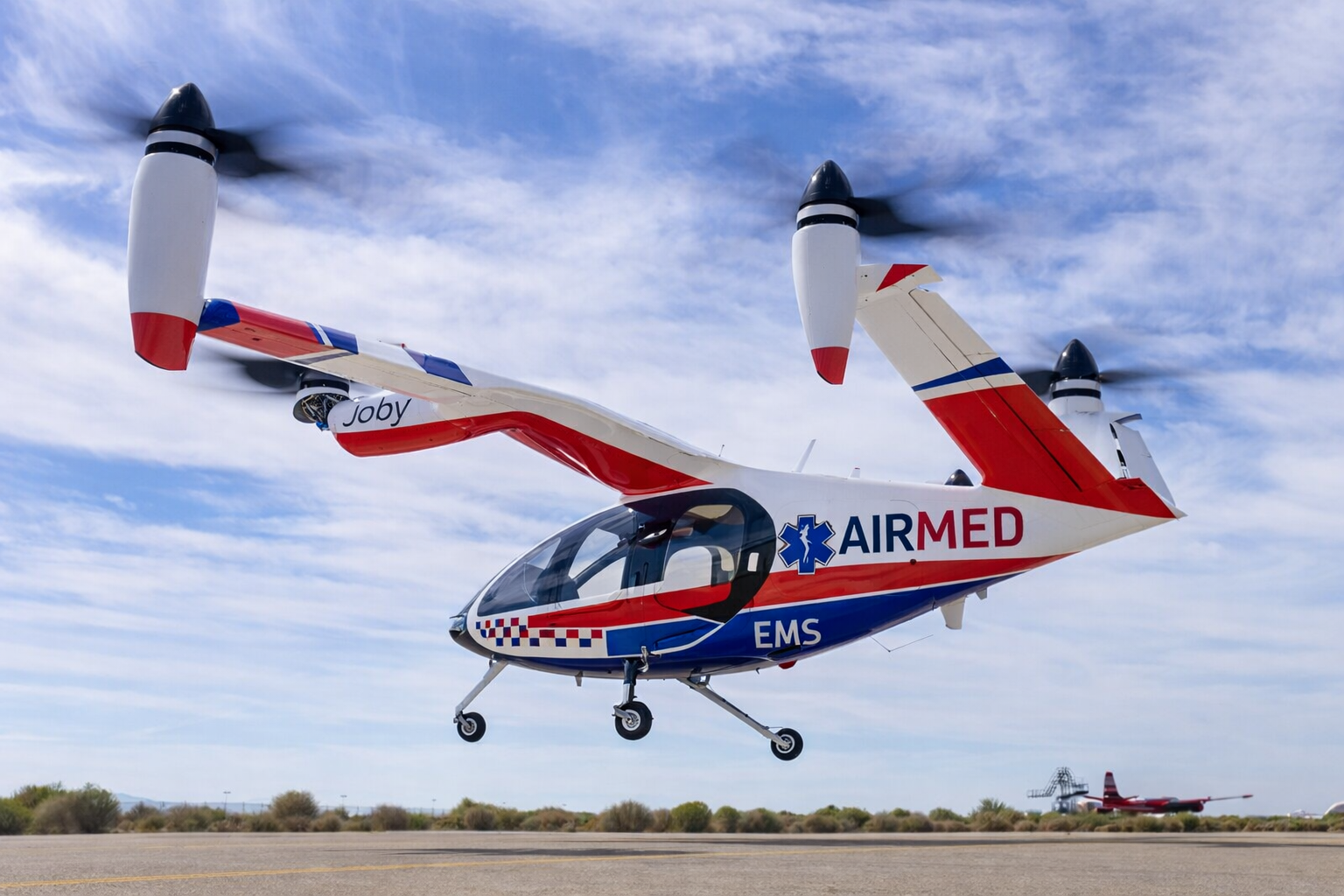
Joby Aviation electric air taxi — selected for 4 of 8 FAA eIPP projects including North Carolina medical operations
eVTOL & Medical Logistics  eIPP • 4 of 8

Joby Aviation

Selected for four eIPP projects across NY/NJ, Texas, Florida, and North Carolina — including piloted medical operations. Furthest along the FAA certification pathway. In February 2026, partnered with Strata Critical Medical for organ and emergency supply transport.

eVTOL Air Taxi  eIPP • 3 of 8

Archer Aviation

Selected for three eIPP projects in New York, Texas, and Florida with its Midnight eVTOL. CEO Adam Goldstein called the eIPP the industry’s “Waymo moment.” Florida’s project includes dedicated medical response phases — cargo delivery, passenger transport, automation, and emergency operations.

Autonomous Flight  eIPP • Texas

Wisk Aero

The only eIPP participant pursuing an autonomy-first approach. Operating in the Texas project with a phased crawl-walk-run strategy, validating the entire digital and physical ecosystem required for autonomous flight — including the regulatory framework for fully uncrewed medical transport.

Hybrid-Electric STOL  eIPP • 4 Projects

Electra

Participating in NY/NJ, Florida, and Pennsylvania eIPP demonstrations with its EL9 Ultra Short hybrid-electric aircraft — the world’s first of its kind. Ultra-short takeoff capability opens access to locations where traditional runways don’t exist — critical for rural and frontier EMS.

Autonomous Cargo Drones  eIPP • Louisiana

Elroy Air

Selected alongside Bristow Group for the Louisiana eIPP project, deploying the Chaparral autonomous cargo drone for deliveries over the Gulf and to energy industry locations across Louisiana, Texas, and Mississippi. Autonomous cargo logistics applicable to medical supply chains.

Global Context — The Competitive Reality

While the U.S. eIPP is preparing for summer 2026 operations — all with pilots — other nations are already deploying eVTOLs for emergency response, medical transport, and fully autonomous passenger flight. The global race for EMS aviation is not waiting for America.

Japan & Taiwan — Inter-Island EMS

SkyDrive & 7A Drones

Japan’s SkyDrive signed with Taiwanese operator 7A Drones to deploy up to 10 SD-05 eVTOLs for emergency medical transport across Taiwan’s Penghu Islands — 90 islands where helicopter and ferry evacuations are weather-dependent. Delivery starts 2028. Hujing Island’s 860 residents currently rely on one clinic.

Singapore — EMS Proof of Concept

Vertical Aerospace & Singapore HTX

Awarded a POC grant from Singapore’s Home Team Science & Technology Agency to develop EMS use cases for the Valo eVTOL — including medical cabin configurations, ConOps for remote island response, and a proof-of-concept flight demo. Project runs through April 2026.

EU — Medical Air Mobility Research

EHang & SAFIR-Med

EHang is the only passenger eVTOL partner in the EU-supported SAFIR-Med project — demonstrating medical air mobility across Antwerp, Aachen, Maastricht, Athens, and Prague. Supported by EASA and the Red Cross. Funded under EU Horizon 2020.

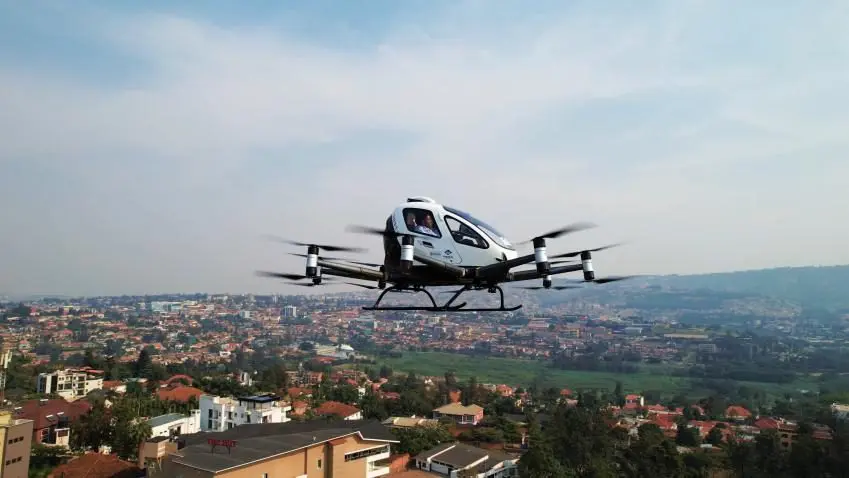
EHang EH216-S fully autonomous pilotless eVTOL aircraft carrying passengers over an urban area — the world's first certified autonomous passenger-carrying eVTOL
EH216-S — Autonomous Passenger Flight
EHang EH216-F autonomous firefighting eVTOL deploying fire suppression on a high-rise building — pilotless emergency response already operational in China
EH216-F — Autonomous Firefighting
EHang EH216-S fleet operating near a medical facility — part of the EU SAFIR-Med medical air mobility research project with EASA and the Red Cross
EH216-S — Medical Air Mobility
Autonomous eVTOL — Passenger, Firefighting & Medical  Certified • Commercially Operating

EHang Holdings (Nasdaq: EH)

The world’s first certified autonomous passenger-carrying eVTOL. The EH216-S received type certificate, production certificate, standard airworthiness certificate, and air operator certificates from the Civil Aviation Administration of China — and is commercially flying passengers today in multiple Chinese cities including Hefei, Guangzhou, and Shanghai.

Fully pilotless. No onboard pilot, no remote pilot — autonomous flight managed by ground-based command centers. Two passengers, 130 km/h cruise, 35 km range. Expanding to Thailand, UAE, Japan, Indonesia, Turkey, and Kazakhstan. Pre-orders exceed 1,200 units.

Emergency response variants: The EH216-F firefighting eVTOL reaches 600 meters altitude — far beyond any ladder truck — carrying 150 liters of foam and six extinguisher projectiles. The first production unit rolled off the assembly line in Beijing in December 2025. Pilotless, autonomous firefighting deployed before ground crews arrive.

EHang is also the only passenger eVTOL partner in the EU-supported SAFIR-Med project — demonstrating medical air mobility in Antwerp, Aachen, Maastricht, Athens, and Prague, supported by EASA and the Red Cross. The long-range VT-35 adds 200 km range at 215 km/h for intercity medical logistics.

Continue Exploring

Next: The Warning

What happened to the taxi industry is a warning. EMS must lead its own transformation — or become the next industry to be disrupted.

Donnie Woodyard, Jr., MAML, NRP — Executive Director of the United States EMS Compact, six-time author, Harvard AI in Healthcare certificate holder, fixed-wing pilot, and nationally recognized EMS keynote speaker with over 30 years of prehospital care leadership

Donnie Woodyard, Jr.

Paramedic, pilot, and Executive Director of the United States EMS Compact. Author of The Future of Emergency Medical Services: AI, Technology & Innovation and five additional titles on EMS history, leadership, and policy.

Paramedic Fixed-Wing Pilot FAA Part 107 Commercial Drone Pilot Exec. Dir. — US EMS Compact Former State EMS Director Six-Time Author 30+ National Keynotes